

I hit 10 days sober today.
That might not sound like much to someone who’s never wrestled with alcohol, to someone who’s never had their brain quietly rewired by a substance that society insists is “normal,” “safe,” and “just part of life.”
But if you know, you know.
Ten days isn’t a finish line, and this post is not a victory lap; it’s the moment the fog starts to thin just enough to realize how bad it was, and how dishonest the conversation around alcohol has always been.
Nobody tells you the truth about alcohol; they sell you a story.
Alcohol is the only drug you have to justify not using.
Start there.
If you say “I don’t drink,” the room gets weird.
You don’t get interrogated for not smoking cigarettes. You don’t get questioned for not doing cocaine. But alcohol? Suddenly, you owe people an explanation.
That alone should tell you something is off.
Here’s the part people avoid because it doesn’t fit the social script:
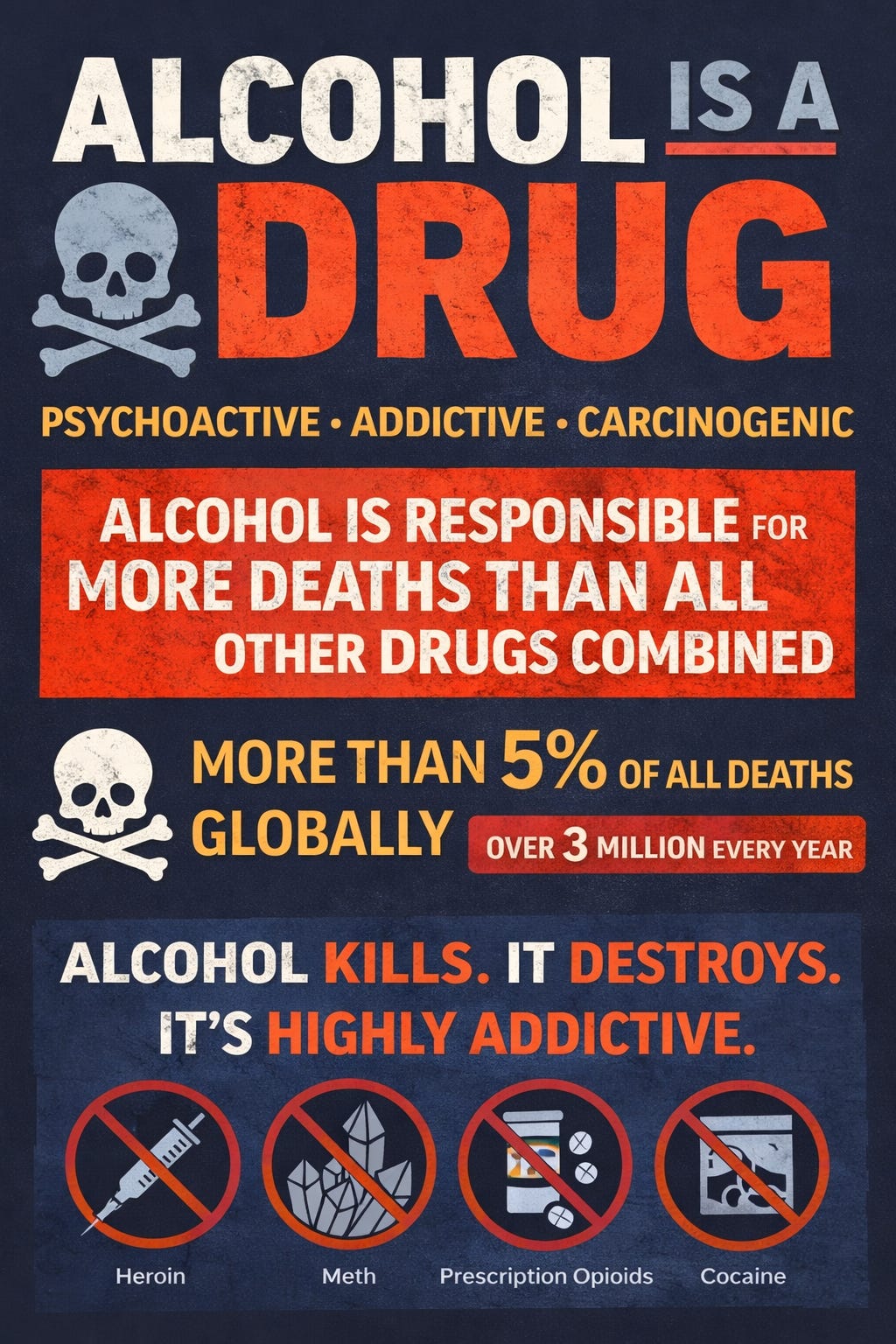
Alcohol is a psychoactive drug, a central nervous system depressant, and a known carcinogen. That isn’t opinion, and it isn’t “get sober because I am” messaging…
That’s the classification of the drug ‘alcohol’.
Biology doesn’t care how cute the marketing is or how normalized the behavior has become.
“Just a drink” is marketing language, not physiology.
Alcohol doesn’t care about vibes, intentions, or the promise you made to yourself that this time you’ll keep it moderate. Once it’s in your body, it does what it does every single time.
Your liver treats ethanol as toxic and prioritizes processing it.
While that’s happening, fat burning gets disrupted, inflammation can rise, sleep quality gets hammered, and brain chemistry gets altered. That relaxed feeling people chase isn’t peace, it’s chaos.
It’s your nervous system being suppressed, and you're mistaking the sedation for relief.
Also, few know that alcohol is 100% known to cause cancer.
This is the part that’s been buried under wine culture, “heart health” myths, and the idea that if you’re not blacking out, you’re fine…
Alcohol is classified as a Group 1 carcinogen, the same as tobacco and asbestos.
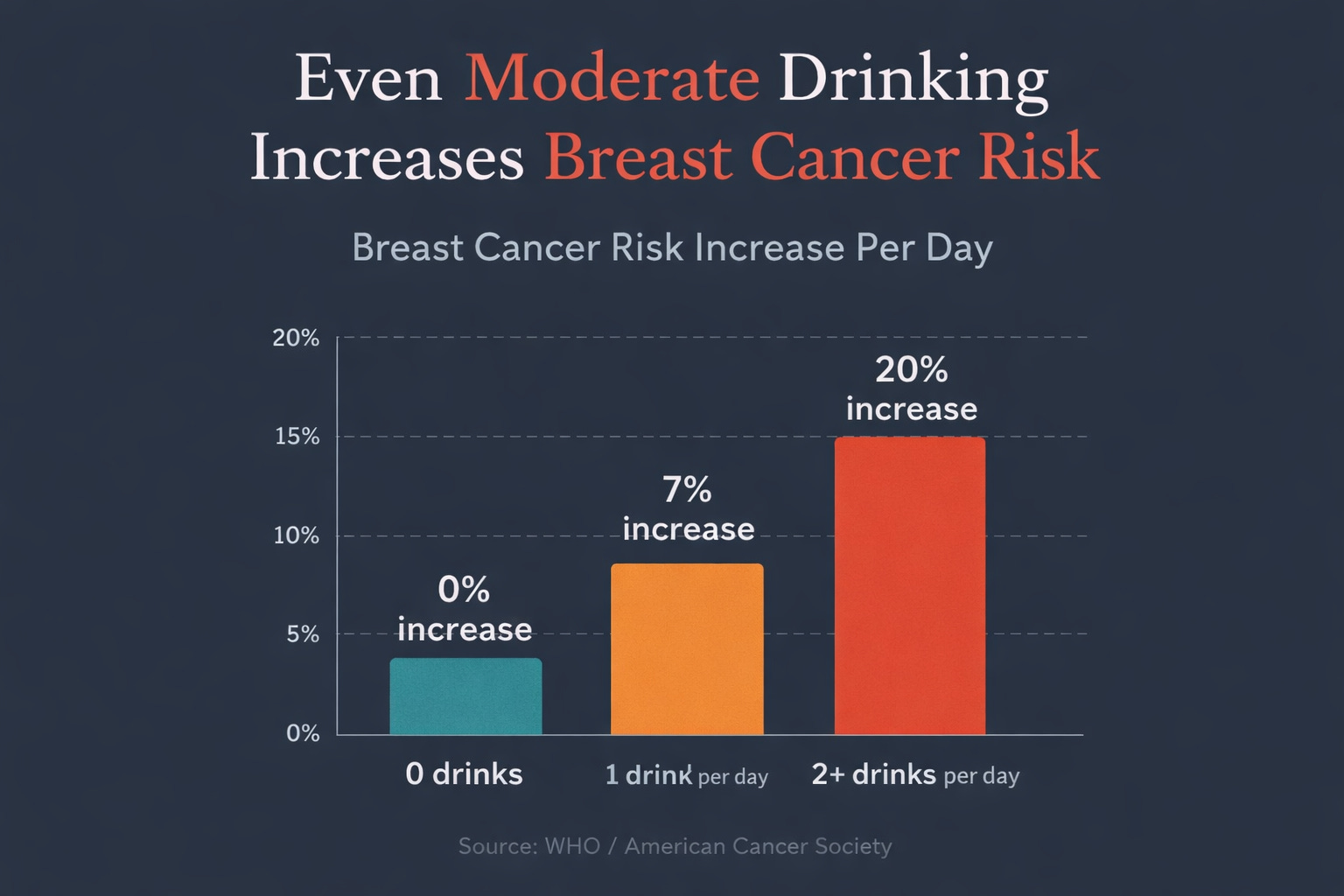
Increased risk includes cancers of the mouth and throat, esophagus, liver, breast, and colorectal. The uncomfortable truth is that the risk increases with consumption, and the “safe” line people want to believe in is not as comforting as they wish it was.
Then there’s the brain, the place most people don’t connect to alcohol damage until they get a taste of clarity again.
 Tiktok failed to load.
Enable 3rd party cookies or use another browser
Alcohol is associated with changes in brain structure & function.
Alcohol disrupts neurotransmitters, interferes with memory formation, and drags down executive function.
You don’t notice it happening in real time, you just start calling it brain fog, stress, aging, burnout or anything except what it is. And because so many people around you are doing the same thing, the baseline shifts.
A sad truth is that alcohol has made it normal to feel like shit in our society…
Dysfunction becomes normal, and normal becomes “too stressful”.
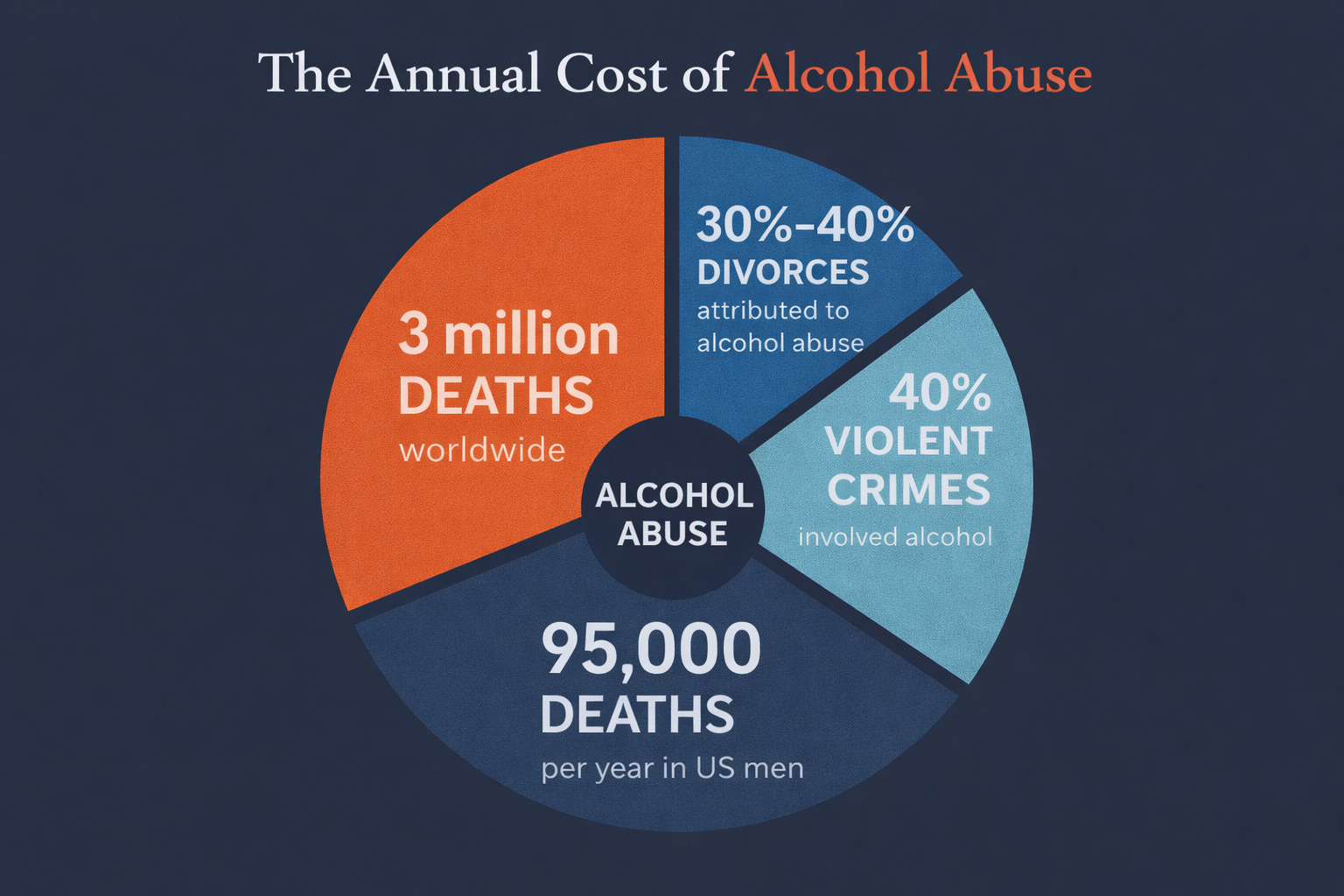
Another lie society sells is that addiction is a personality defect.
“Some people just can’t handle it” is a convenient way to protect the drug and blame the person; the marketing behind this has been executed with surgical precision, and if it wasn’t so fucking evil, I’d be impressed.
Alcohol alters dopamine and other key neurotransmitter systems tied to reward, anxiety, and emotional regulation. Repeated exposure trains your nervous system to associate alcohol with relief and social safety, which is why the pull can feel irrational and stronger than your logic.
This is to say that your struggle with skipping the booze isn’t a weakness; it’s a product of your unintentional conditioning of self.
When people say, “I don’t have a problem, I just like it,” they’re often describing the exact mechanism addiction thrives on before it becomes undeniable.
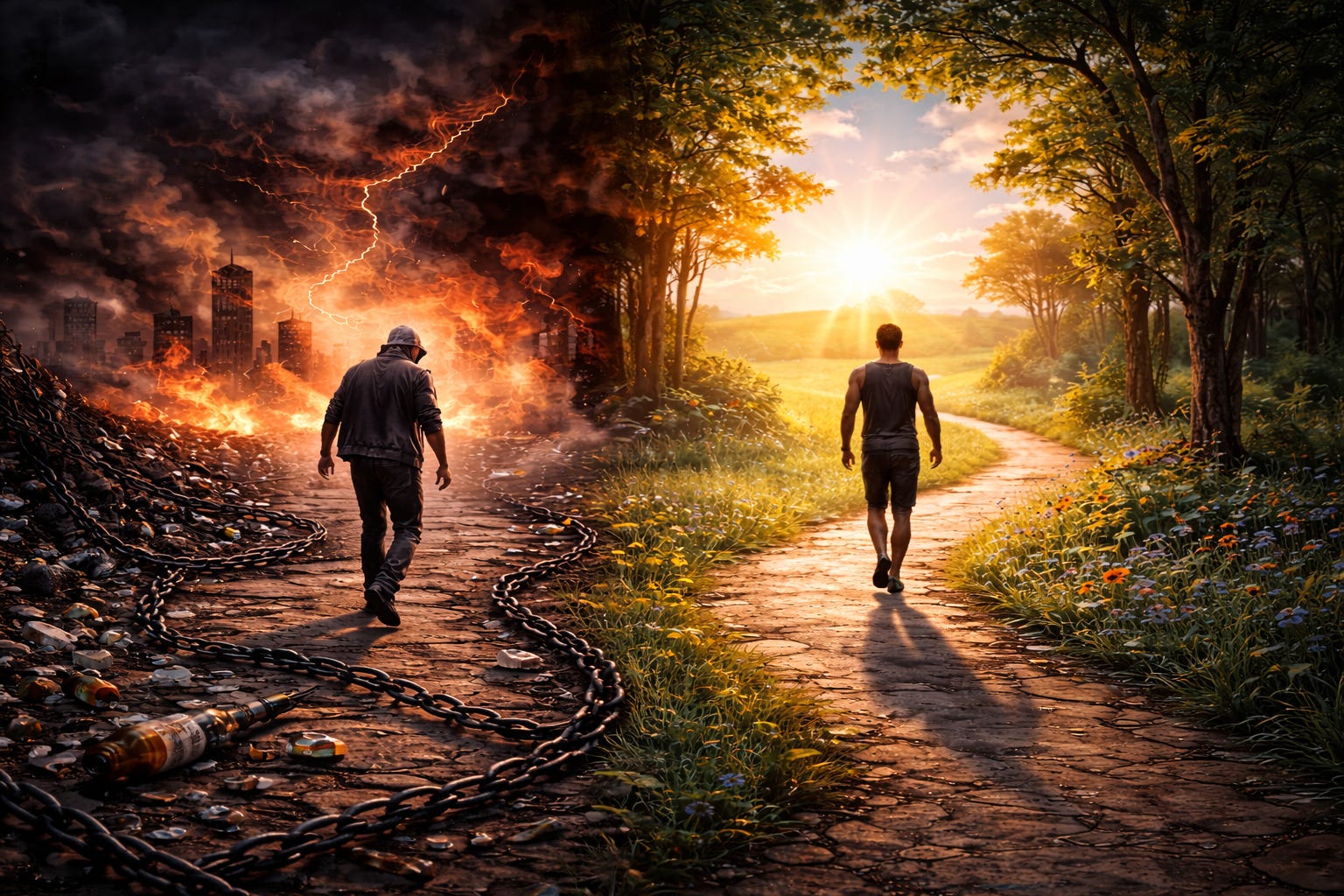
So why does nobody talk about any of this?
Because alcohol is profitable.
It’s taxed, embedded in tradition, and defended socially by people who don’t want to question their own habits.
If alcohol were discovered today, it would never be legalized in its current form.
But, because it’s familiar and wrapped in nostalgia, it gets a free pass. The person who steps away gets labeled extreme, boring, judgmental, or “too serious,” which is insane considering how much seriousness alcohol quietly steals from people’s lives.
Ten days in, I’m already noticing changes.
Sleep is deeper, mornings are clearer, workouts are consistent, anxiety is lower, and while random cravings may show up, I see them for what they are: Old patterns and habits, and they’re only in waves rather than “I NEED THIS” commands.
My mind feels present, and it’s not that big a deal, because I am aware that I’m just watching normal human functioning return, and the most uncomfortable realization is how much dysfunction I had justified as normal.
Sobriety isn’t about moral superiority.
Alcohol doesn’t make life better; it makes life quieter, numbed, and smaller while convincing you it’s helping.
Ten days ago, I stepped off the ride again, not because I’m broken, but because I’m finally honest enough to admit what alcohol actually costs, and I’m no longer willing to pay that price.
- Zachary Small