

People aren’t failing because life is unfair…
They’re failing because they’ve trained themselves to escape responsibility the moment discomfort shows up.
Somewhere along the way, blame became a way of life.
And it always sounds the same.
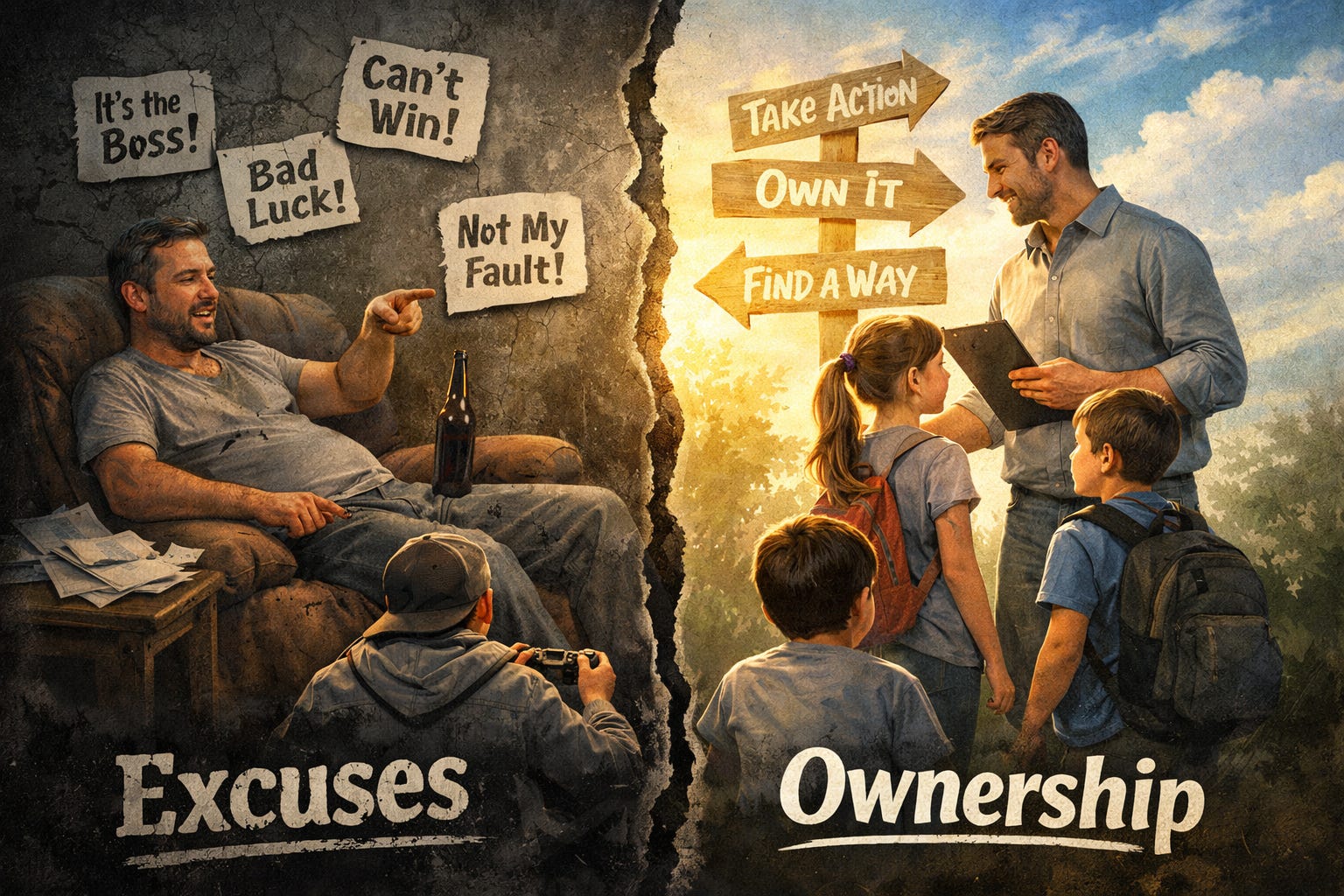
It’s the town. It’s the past. It’s the boss. It’s the anxiety. It’s the trauma. It’s the spouse. It’s the parents. It’s the economy. It’s the job market. It’s the kids. It’s that one coach from when I played sports. It’s bad luck. It’s a lack of help. It’s a lack of time.
It’s anything, as long as it’s not the mirror.
Now, let me say this so the sensitive crowd doesn’t twist my words into something they’re not saying, “I acknowledge that some of those reasons excuses, are real.” I just don’t care, and neither does life.
You’ve got to handle your shit with the cards life dealt you, and nobody cares about your justified or perceived reasons why your life isn’t anywhere near what we’d call a successful, or even functional adult.
Some people were handed a mess they didn’t choose.
Some people are navigating obstacles that other people never even have to think about. Some people grew up in chaos, got betrayed, got set back, got hit with real injustice; that part’s not imaginary.
But here’s the part nobody wants to say out loud because it removes their favorite hiding place, a hard life doesn’t eliminate your responsibility to perform.
The people who build something in spite of their past, the ones who rise, they could’ve used those same reasons you have as permission to stay stuck, and they didn’t. They took the hit, acknowledged the pain, then kept moving anyway.
That’s what ownership looks like; not pretending life is easy, not denying trauma, and not acting like everything is “equal or fair;” Ownership is just refusing to use reality as an excuse to quit.
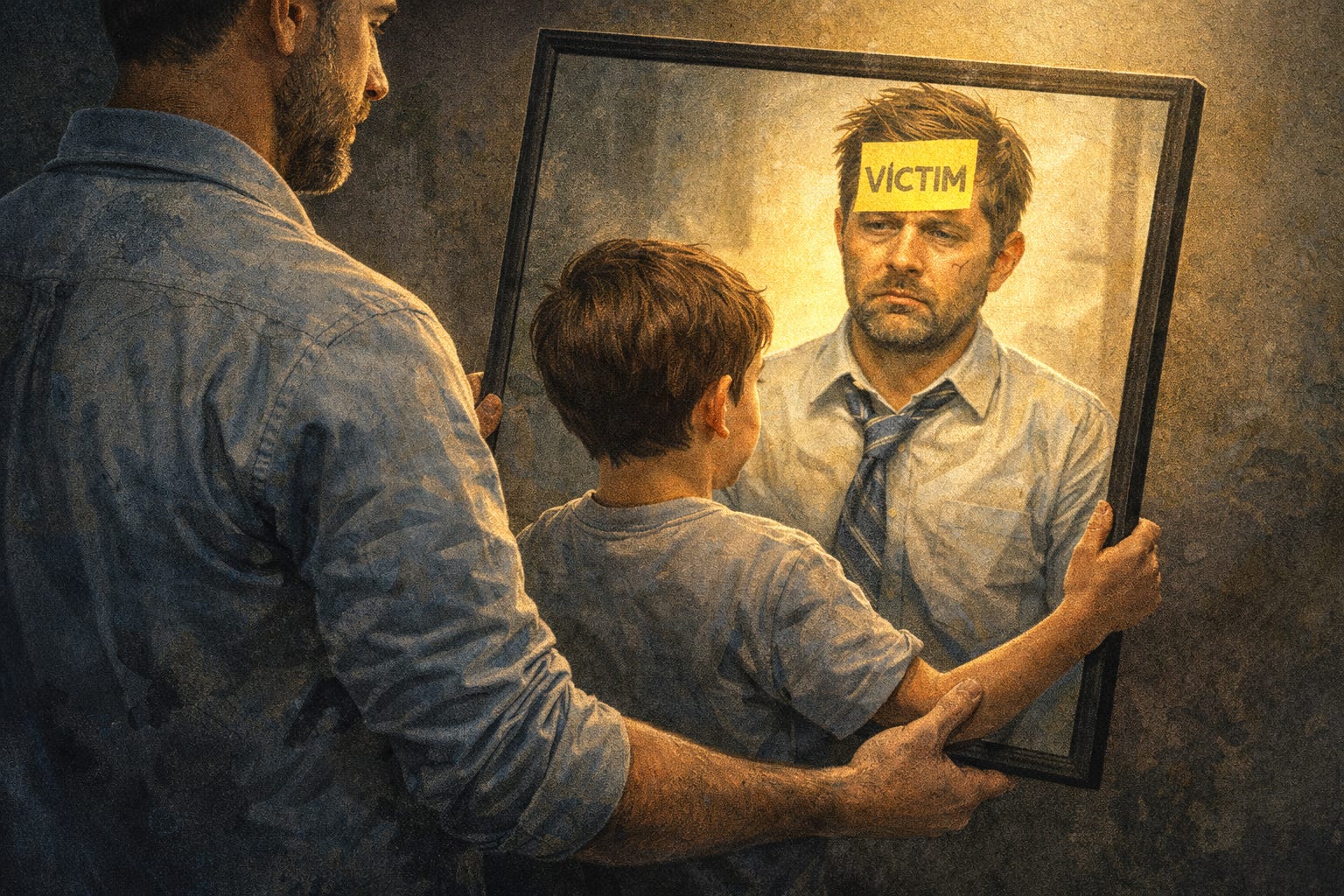
And if you’re a parent, the stakes aren’t only your life, because you aren’t just explaining your situation to yourself, you’re teaching your kids how to interpret life.
You are imprinting a worldview on them every time you talk about why you’re not where you want to be.
If a kid grows up watching you blame everything but yourself, they learn that blame is normal. They learn that excuses are protection, and that responsibility is optional…
Ultimately, they learn that “it’s not my fault” is a safe place to live:
They don’t learn grit.
They don’t learn patience.
They don’t learn humility.
They don’t learn how to take correction without crumbling.
They learn how to craft alibis that sound intelligent.
And then we act shocked when they turn into adults who can’t hold a standard, can’t commit, can’t endure discomfort, can’t build anything that takes time, and can’t handle the word “no” without spiraling into a story about why the world is against them.
Children do not follow your advice; they follow your example.
And they sure as hell won’t follow your advice if your example contradicts it, and that’s why this article matters, because victim-mentality isn’t just a mindset; it becomes a family tradition.
What are your kids learning from the way you explain your life?
When you talk about money, do they learn strategy, or do they learn resentment?
When you talk about your marriage, do they learn leadership, or do they learn blame?
When you talk about your body and health, do they learn discipline, or do they learn excuses?
When you talk about your job, do they learn ownership, or do they learn helplessness?
Because you might be telling your kids, “You can do anything,” but if they’re watching you do nothing, they’ll believe what they see, and here’s where the line is, at least in my opinion, between “life is hard” and “I’m avoiding responsibility…”
Life is hard, acknowledges reality, and still chooses action.
Avoiding responsibility acknowledges reality and uses it as a reason to stay the same.
One leads to progress, the other leads to permanent stagnation; so, if you want a practical test, something you can actually apply, try this:
Pay attention to the sentence you repeat the most when you’re frustrated.
“If I had…”
“Must be nice…”
“I can’t because…”
“They won’t let me…”
“That’s just how it is…”
Those phrases are training your brain…
They’re conditioning behaviors and building grooves in your mind, all while your kids are listening, whether you think they are or not.
Swap the language, and you start to swap the identity.
Instead of: “I can’t because…”
Try: “I’m not choosing it because…” (that one stings, because it’s honest)
Instead of: “They won’t let me…”
Try: “What’s my next best move anyway?”
Instead of: “That’s just how it is…”
Try: “What part of this is mine to solve?”
That’s not toxic positivity, that’s not denial, that’s personal ownership and leadership wrapped in one, and both your personal ownership of your life and your leadership are what your kids are starving for; they just don’t know how to say that to you.
So I’ll end where I started, with the question that calls out your excuses,
Where do you think the line is between “life is hard” and “I’m avoiding responsibility”?
And if you’re brave enough to answer it honestly, here’s the follow-up; what would change in your kids’ future if they watched you cross that line back into ownership—starting this week?
- Zac Small