

I’m watching something play out online right now that people keep insisting is “normal,” and I can’t accept that.
A famous man dies a public, violent death, and instead of the surviving spouse disappearing into the private wreckage of real loss, we get a public-facing campaign to capitalize on the momentum behind tragedy.
We’re talking brand momentum, talk shows, podcasts, fireworks, speeches, news interviews, merch, optics, “carry the mission forward,” cash, sales, no kids to be seen, phone calls encouraging workers to keep working, and jokes about Zoom emojis, all included with a bunch of strangers clapping like this is what strength looks like…
And when anyone side-eyes it, the defense comes out, “Everyone grieves differently.”
That’s only something you say when people are doing different (See: Weird) shit…


Yes, people grieve differently, and grief is personal as there’s no single emotional script that everyone follows; but that argument collapses the moment you use it to excuse behavior that isn’t just different, it’s transactional.
There’s a huge difference between:
Returning to work because you can’t sit still in the silence
and
Turning your spouse’s death into a content schedule with a checkout link.
There’s a difference between survival and sales.
If I died, my wife wouldn’t be “driving a company forward” as her public priority. Jackie would be grieving the loss of her husband and soulmate; she’d be in black, unable to speak to anyone but our children, and likely hating the world.
This is not because she’s weak, as some have suggested that, “we just don’t get it because we aren’t as strong as Erika is”.
This is not because she can’t handle it, as some have said, “The mission they had is greater than anything you’ve built, so you don’t know” as love is supposed to cost you something when it’s ripped out of your life, and that something should be greater than an earthly business to keep running on schedule.
What we’re watching isn’t just grief
This is a collision of grief and identity economics, where people don’t know who they are without an audience, and where every emotional event gets pressure-washed into “content” before the body is cold.
Erika took this as an opportunity to put herself before the world, instead of protecting the privacy of her grief and being present for her children. If she didn’t and the business fractured, she would lose control, money, relevance, etc. Those things were placed as a higher priority than anything else.
People online have joked that being on stage and tossing merch to a cheering crowd is the final stage of grief.
Here’s the part that has me writing this; after Candace Owens shared the video I linked to above, people were immediately arguing that what we’re witnessing is both “strength” and completely normal…
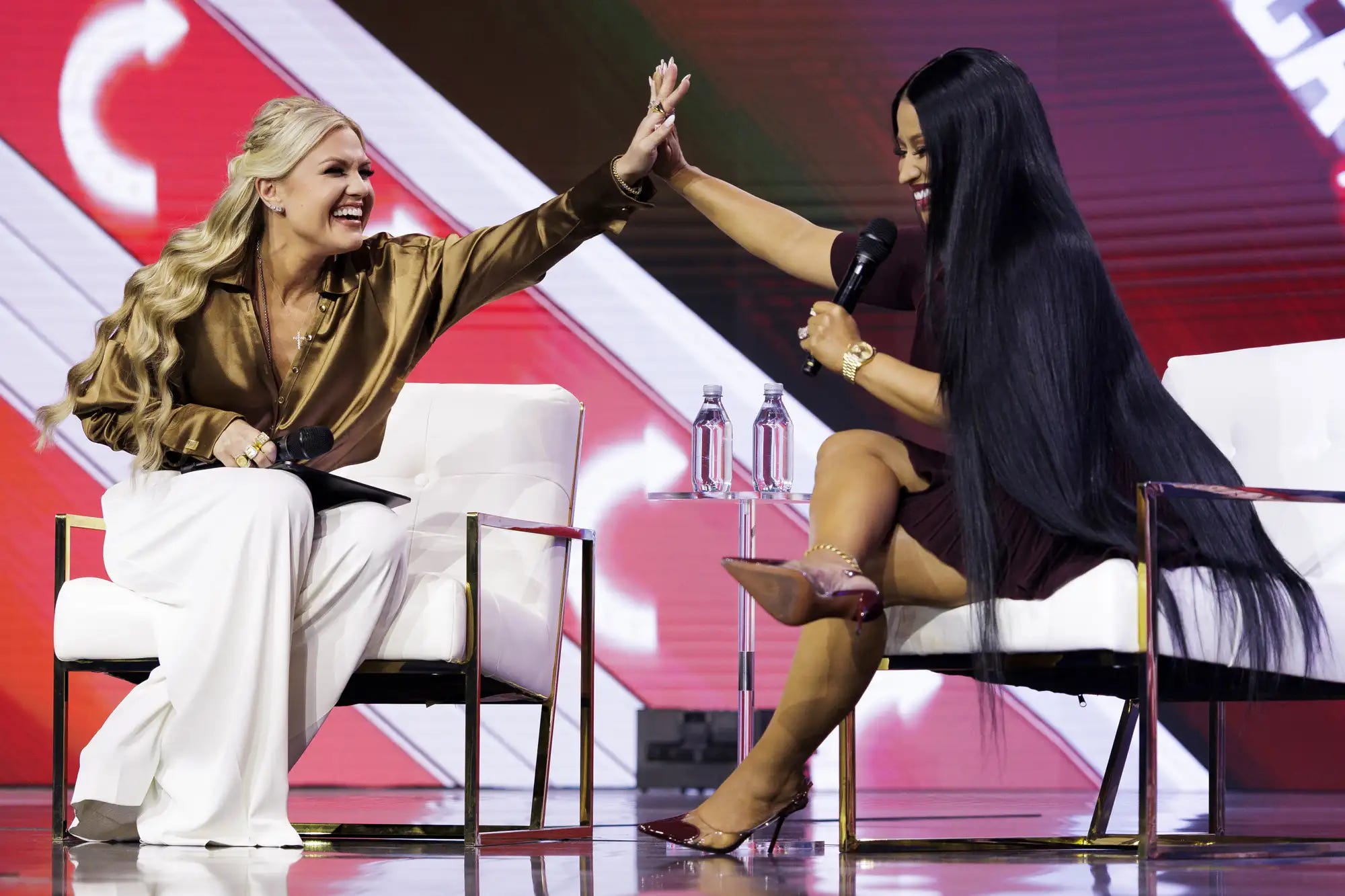
This is not fucking normal.
Not. At. All.
100%, a person can be composed and still be devastated; a person can be functional and still be shattered. But when the public performance is polished, monetized, and brand-aligned, and when it’s packaged like a product launch, don’t insult everyone’s intelligence by calling it resilience.
We aren’t witnessing strength here; what we are seeing is emotional compartmentalization and opportunity capitalization.
The reason this matters is that it is just another example where the media is brainwashing you into believing abnormal is normal. (2+2=5)
Kids watch this.
Spouses watch this.
People in real marriages watch this and start wondering if devotion is just another role you play until it’s inconvenient.
If the first public priority after loss is “the mission,” then the mission has replaced the marriage in our prioritization of how we structure our loyalty.
Grieve differently, sure, but don’t act like normal people are supposed to applaud a culture where death becomes a funnel, a funeral speech becomes copywriting, and heartbreak becomes branding.
Some things must remain sacred, and if we turn death into merch, we’re not evolving as a society, we’re spiritually decomposing.
- Zachary Small