

Let me be clear about something before we go any further…
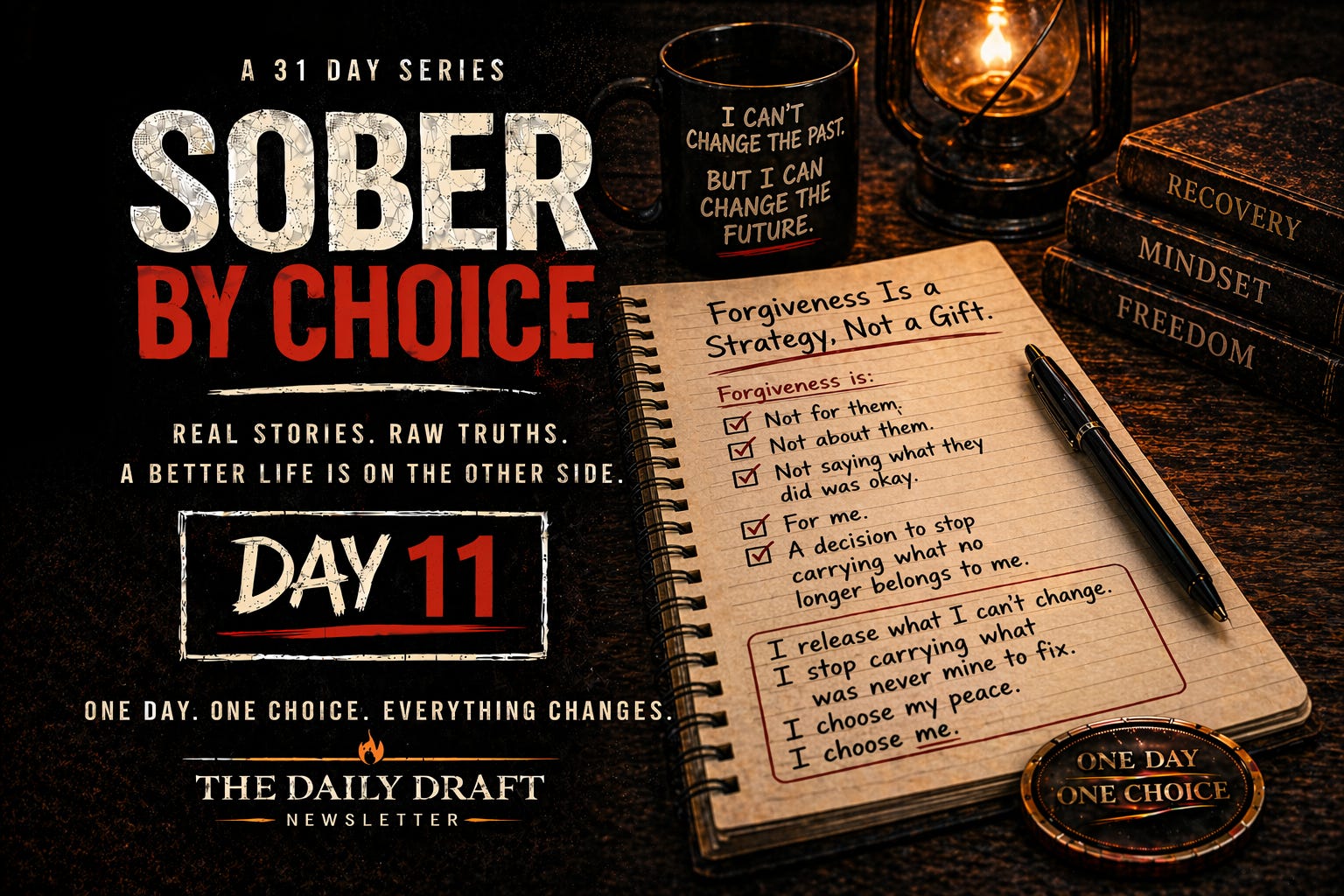
Forgiveness is not about the other person.
It is not a gift you hand to someone who hurt you.
It is not an agreement that what they did was okay.
It is not a phone call you have to make, a conversation you have to sit through, or a relationship you have to repair.
Forgiveness does not require their apology, their presence, or for you to feel they even deserve it.
Forgiveness is something you do for yourself; it is the decision to stop letting someone else’s actions live rent-free in your body and drive your behavior decades after the fact.
It is a strategy, and one of the most important in this book.
I want to tell you about the hardest forgiveness of my life.
It wasn’t forgiving my mother for leaving, it wasn’t forgiving those who betrayed me, and it wasn’t even forgiving myself for the years I lost to drinking.
The hardest one for me was forgiving myself for not protecting my brother and sister when they needed me. That was one of the hardest things I have ever done in my life, and I cannot adequately express in the written word the amount of courage required to even touch on the subject, never mind the immense weight lifted from my soul when I did it. I ugly cried, and it lasted longer than anything I’d ever shed a tear over in my life combined. It was, without any exaggeration, life-altering.
For so long I carried shame, self-hate, loathing, regret, nightmares, anger, rage, sadness, and an immense level of guilt…
“I should have done more, I should have fought, I should have spoken up, I should have been their protector, I should have…But I didn’t.” is something which went through my head, at random, damn near daily, and it was always tucked away with, I’ll never let it happen again.
My brother and sister are twins; they were three years old when our mother died; I was six. We were all just kids dropped into a situation none of us had the tools for, and life moved us around the board the way it does when adults make the decisions. But we were always together, and that meant everything.
There was a person in our lives years later who would end up hurting the people I loved most, and this would be one of the most significant “traumas” that sent me down a very dark path, leading to the reliance on alcohol to get by. This person created an environment of fear, took advantage of us, and hurt us in a way that will never be forgotten or forgiven.
When it happened, I said nothing…
I did nothing…
Because I was young, because I was not connected enough to my family unit to feel like I had a strong foundation to share something so explosive, and because this person made it clear that if I ever pushed back, as the only sibling adopted and not biological (I have a different father than my siblings), I would be threatened that I’d be removed from the family.
I stayed quiet, and I was reminded every time I saw this person that if I ever muttered a sound, I’d no longer be a part of the family and would be sent away.
I carried the weight of that silence for most of my life.
The rational part of me knows that no child should be put in that position, and that the responsibility for what happened belongs entirely to the individual who created that situation and did that to children; it does not belong to the kid trying to survive inside it.
But rational understanding and emotional forgiveness are two different things. I’d never forgiven myself, but when I got sober, I was finally able to face that demon; I had to, or I’d have returned to booze to drown the voice of guilt and shame away.
Instead, I embraced those voices, as hard and painful as it was, I had to, and you’re going to have to do this too. Can you feel the pain in these words? Do you understand how fucking hard this was for me to? It took everything, but it was necessary, and it changed my entire life. I let go of those chains that were holding my soul down, and I finally accepted that it wasn’t my fault; I was 13, but I was still a kid and in an environment where I was vulnerable and exploited.
I forgave myself for not doing what needed to be done because I allowed myself, for once, to stop sparing others their responsibility in the story. I have not forgiven the predator, in the same way I would never forgive anyone who hurt children like that; they should die for targeting the most innocent of society for their evil deeds.
But I forgave myself, I deserved my peace, because I wasn’t the one who did the evil thing, yet I’d been the one carrying that anchor, and I was the one who had been drinking on top of that guilt for years, using the bottle to blur the edges of something I did not know how to hold.
I realized, after getting sober, that the guilt was not going to leave until I was willing to look at it directly and say, I was a child, I did what a child could do, and I am done punishing myself for the limitations of a thirteen-year-old placed in an impossible situation. That is not a weakness; it is one of the hardest things I have ever done, and you’re going to have to do that too.
You have something like this; you wouldn’t have allowed your drinking to have reached the point where you needed to seek help from others (or this book) if you didn’t. It might not look the same as my story, but somewhere in you, there is a person, or a version of yourself, that you have been refusing to forgive because some part of you believes the punishment is still deserved.
The punishment (slow suicide by booze) was never going to fix what happened; it was only ever going to keep you stuck in the cycle of pain, which, subconsciously, you may have felt you deserved.
Staying stuck in it gave you a reason to keep drinking, because the drink was the only thing that made the stuck feeling bearable for a few hours, and the pain was what “bad people” were supposed to feel; have you ever told yourself, “I guess I’m just a fuck up?” or “I’m wired wrong, like a defective toy”?
If you haven’t noticed by now, only when you accept that you’re an addict because of other people’s actions is the moment you can start taking action towards healing.
You are not drinking anymore, which means the thing you’ve avoided has nowhere to hide, and now it is time to deal with it.
It’s time for you to forgive yourself.
Your Day 11 Sober-Challenge
Take the unsent letter you wrote on Day 10 and read it back.
Then write one more paragraph at the bottom, not to them, to yourself.
Write what you are releasing.
Not what they did, but what are you choosing to stop carrying?
That paragraph is the beginning of forgiveness, not the end, the beginning, and beginnings are enough for today.
I said forgiveness was a strategy, not a gift, because we’re seeking sobriety and healing here. Addressing the major gaps in embracing who you are is essential to long-term sobriety. Forgiving and moving on from what has been unresolved is a critical step in the direction we want to go, which is the direction where the voice in your head that you want to numb isn’t so loud, because the “demons” haven’t been pushed down; they’ve been embraced and accepted as a part of your story, not the point of it.
- Zac