

I’d originally planned to blast the DARE Program in this article, because I was thinking that it still operated the way it did when I went through it…
(I also went through Scared Straight, but that’s a story for a different time…)
Is the program still banging the drum about marijuana, but leaving alcohol completely out of the discussion?
That was the foundation of my article, but then I asked parents of children who recently went through the D.A.R.E. program in my county for input, and the response was pretty solid.
I had teachers, parents, and a few cops reach out and let me know that alcohol has “entered the chat”, and while I heard that it didn’t get the same emphasis as other drugs, it did get time in the spotlight of drugs which should be avoided.
Then I had a parent/teacher add one line to her response to my question, “During the graduation, parents were also encouraged to set the example for their kids” and that is what sent my mind in a different direction…
That is what this article is about.

Parents, not schools, shape the most powerful substance narratives in a child’s life
No school program, no matter how well designed, can compete with what a child watches every day at home. Curriculum introduces ideas, and behavior instills beliefs, so the most powerful drug lesson your child is learning isn’t coming from a classroom, it’s coming from their kitchen.
Schools can introduce concepts, and programs can explain risks, but beliefs are formed through repetition, observation, and pattern.
Parents think that because their kids don’t see them smoking a bowl or joint, snorting powders, popping pills, or injecting into their vein,s that they’re doing a good job in not turning their kids into drug addicts.
So they relax, believing the danger lives somewhere else; in other families, other neighborhoods, and other homes.
But the drug children are exposed to most often isn’t hidden, illegal, or rare; it’s legal, normalized, and socially protected.
Let me introduce you to my former “friend” Alcohol.
It’s present at celebrations, at dinner, during stress, after long days, on weekends, and during holidays. It’s framed as harmless because it’s legal, even though it alters behavior, emotions, and relationships more consistently than any other substance children encounter.
Children don’t learn from warnings; they learn from patterns.
You can explain that alcohol is “for adults” or that kids shouldn’t drink, but that explanation carries very little weight compared to what they observe.
They notice how moods change after a few drinks.
They notice the smiles, laughter, and generosity, then the shift towards shrinking patience, escalating arguments, and stress being managed chemically.
They notice your joy as being paired with intoxication.
They don’t need statistics or health classes to understand alcohol’s impact; they live with it…
Alcohol is a drug; you don’t call it that because you use it. Your kids watch you change under it, night after night, and that lesson sticks longer than anything a school ever teaches them.
You warn your children about drugs, then pour one at dinner.
You call it normal because admitting the truth would force change.
Children don’t miss that contradiction; they absorb it.
When alcohol causes harm, adults soften the language, spewing lies like, “It was a bad night, I had too much, you know that my stress is high, that’s not who I really am...”
We don’t offer that generosity to other substances.
We don’t normalize their damage or downplay their consequences.
Alcohol alone receives cultural immunity, and that’s why it imprints so deeply on children; alcohol isn’t just used, it’s defended.
This is where the conversation about prevention breaks down.
Programs like D.A.R.E. aren’t failing the youth because they lack information.
In fact, modern prevention curricula focus heavily on emotional regulation, decision-making, peer pressure, and consequences; these facilitators try to teach kids how to think, not just what to avoid.
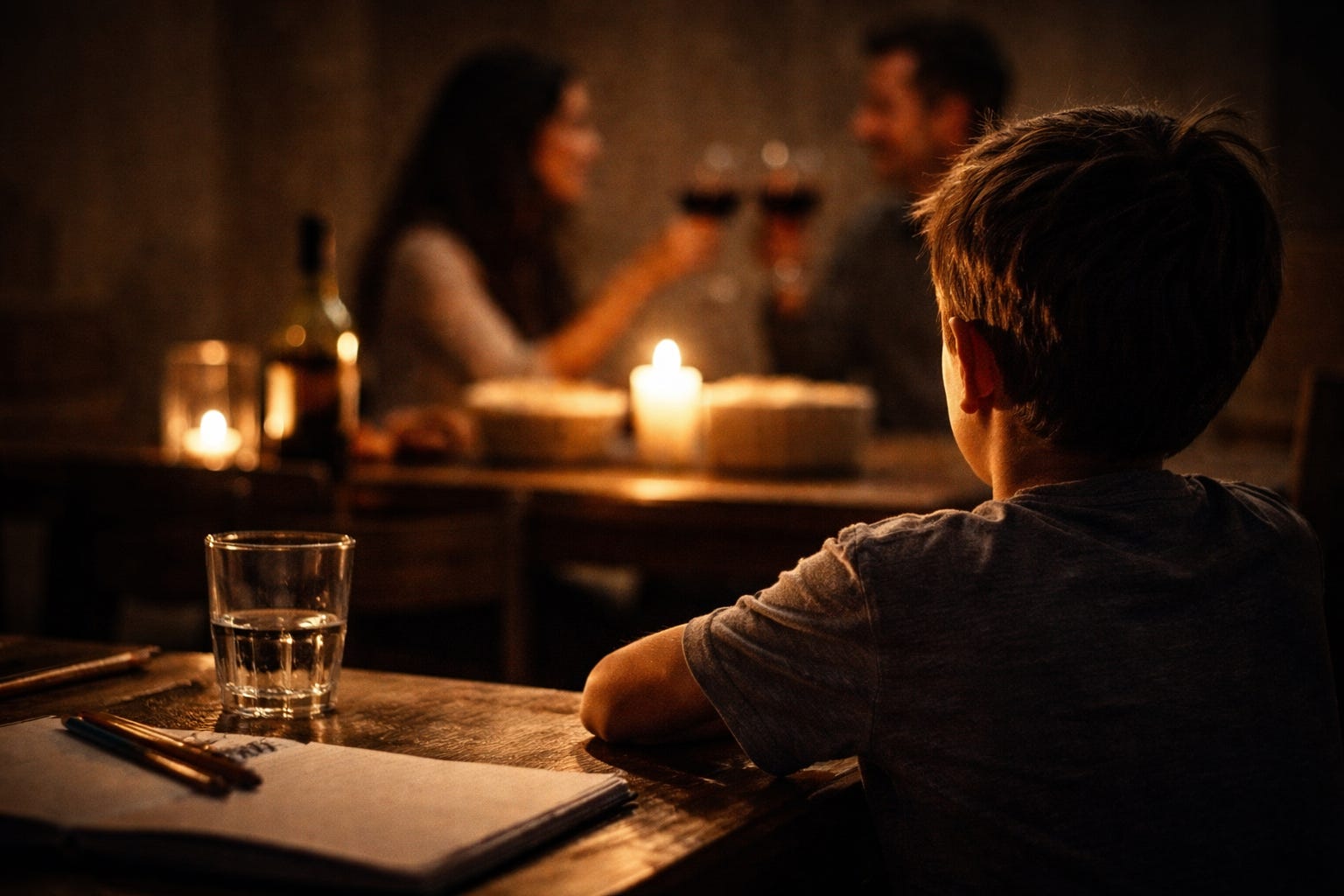
The failure happens when those lessons end at the classroom door.
When kids leave school hearing about risk and responsibility, then return home to see alcohol treated as untouchable, the message collapses. Not because of hypocrisy in words, but because of contradiction in behavior.
This isn’t about shaming parents.
It’s about leadership.
You don’t need a perfect past, you don’t need to pretend you’ve never struggled, and you don’t need to model flawlessness.
You do need to bring some clarity to your life.
When parents refuse to confront alcohol honestly, they don’t protect their children from harm; they leave them to interpret it alone…
The most important drug conversation does not happen in school.
It happens at the dinner table, in daily routines,with how stress is handled, and the way celebration is framed.
Show your children how to cope with life as an adult, without running from your pain and issues to the bottom of a glass.
If parents want their children protected, they must stop outsourcing moral leadership.
Schools can support the conversation, but they cannot replace it because the most powerful prevention strategy has never been a program; it’s parents who lead, clearly, honestly, and without excuses.
Stop making excuses for booze, I D.A.R.E. you.
- Zac Small
PS: I wrote this as someone who is currently 19 days sober; I’m not judging you, but I’m also not condoning your behavior. I had to have tough discussions with myself and be honest with my kids.
They’re worth the effort.
They’re worth saving yourself from the marketing, propaganda, and normalized self-destruction that comes with alcohol.
If you need help, reach out.