

When you’re a man with real responsibility, stress doesn’t show up as a vague feeling; it’s specific.
It’s the text from a client at 9:47 PM, the equipment that breaks right before a deadline, the bill that hits the account sooner than you expected, the kid who needs you right now when you’ve got three jobs spinning in your head…
You’re not sitting around wondering what to do with your life;
You’re trying to figure out how to carry all the things already on your plate without turning into a version of yourself you don’t like.
That’s the heart of the conversation Shay and I had on Episode 16 of The Landscaping Podcast, “Under Pressure (How to Handle Stress).”
It’s not a fluffy self-help talk.
It’s two men in the middle of it, pulling apart what pressure really is, what it does to us, and how to handle it without snapping.
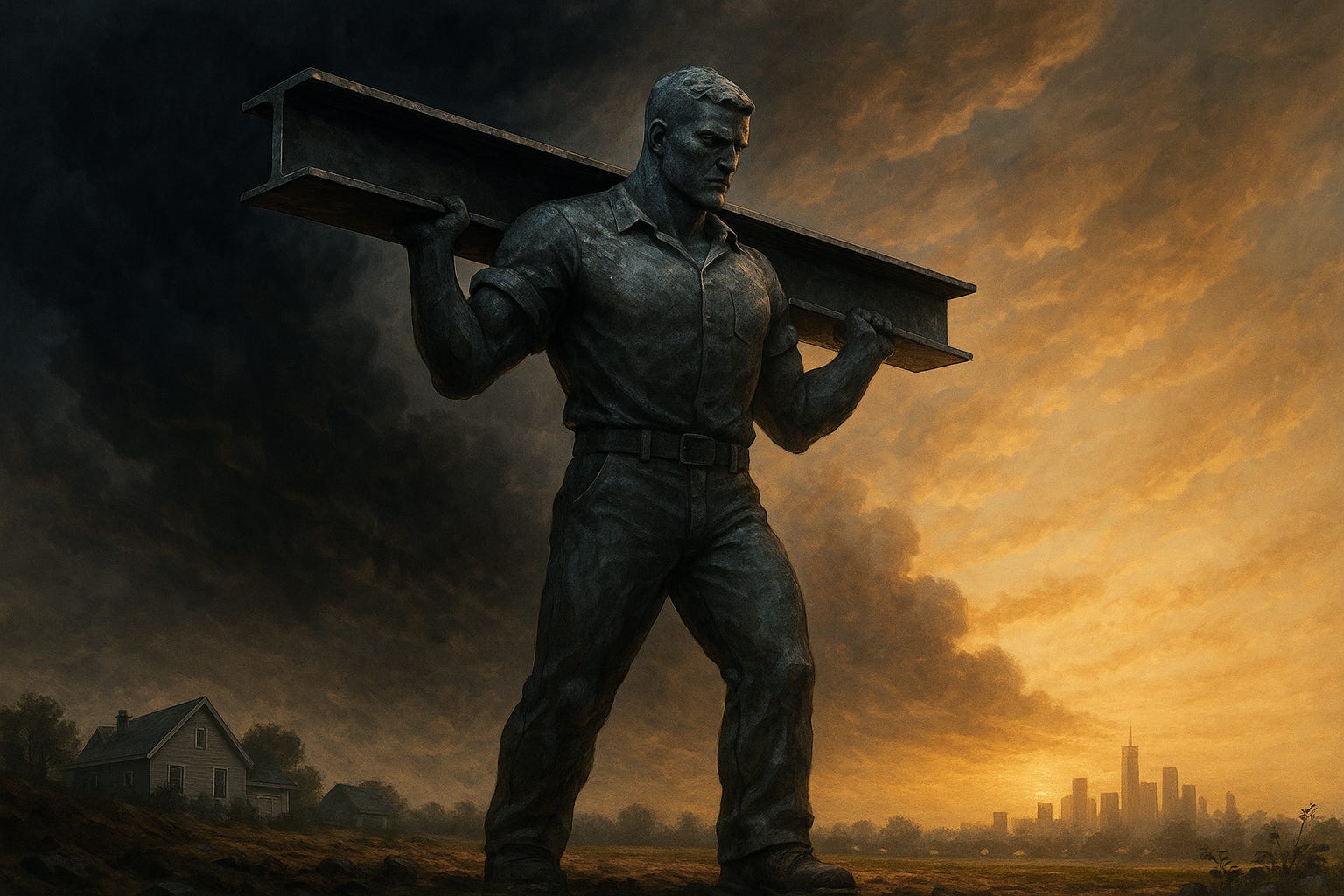
One of the first distinctions we made in the episode was between pressure and stress, because they’re not the same.
Pressure: The weight of responsibility to the people who depend on you, the jobs you’ve committed to, the mortgage, the payroll, the family whose life is built on the back of your effort.
Stress: The story you tell yourself about that weight.
Two men can carry the exact same load and experience it completely differently.
Shay tends to feel pressure and think, “Good. This is what I signed up for. Let’s go.” I lean more into a Stoic frame: “This is external. I don’t control the weather, broken equipment, or clients’ moods, but I control how I respond.” The load doesn’t magically change, but the meaning we attach to it does, and that meaning is often the difference between growth and burnout.
Most men never separate those two…
They feel everything as stress, and the internal monologue gets toxic fast:
“If this job goes sideways, I’m a failure.”
“If this client is upset, I’m not good enough.”
“If I can’t keep up, everyone else is passing me.”
At that point, the work isn’t the thing crushing you, your interpretation is.
Pressure is heavy, yes, but it can be clean.
Stress is the residue that builds up when you mix the weight of responsibility with self-doubt, shame, resentment, and unrealistic expectations of yourself. In the episode, we kept circling back to this:
The problem for many men is not that life is too heavy; it’s that they’re beating themselves up while carrying it.
There’s also a lie many men live on that goes like this: “If I can just get through this week, things will calm down…”
If you’re building anything worth a damn, a business, a family, a reputation, a legacy, etc., then things are not going to “calm down” as the pressure may shift, but it doesn’t disappear, and it shouldn’t; that pressure is what you built, it’s a healthy reminder to show up and lead well.
Your kids don’t need you less; their needs change.
Your business doesn’t become simpler; it becomes more complex as you grow, as there are more people, more moving parts, and more consequences.
The goal is not to reach some fantasy point where life is easy and no one needs anything from you. The goal is to become the kind of man whose capacity rises with the demands placed on him.
That’s what we really talked about in this episode, not how to escape pressure, but how to grow into it.

To do that, it helps to separate good pressure from bad stress.
Good pressure is the weight that comes with the life you chose, such as being a husband, a father, a business owner, a leader; it shows up as commitments, deadlines, and people who trust you to deliver.
You feel it in your chest and shoulders, but it sharpens you and forces you to show up prepared, focused, and disciplined.
Bad stress, on the other hand, is usually the cost of avoidance.
It’s the awkward conversation you keep dodging, the boundary you refuse to set with a client, the systems you never build, the habits you won’t address because “you’re too busy.” That kind of stress shows up as brain fog, simmering resentment, late-night numbing, and a constant sense that your life is running you instead of the other way around.
The hard truth is that some of what we call “stress” is actually self-inflicted chaos.
When men don’t know what to do with all this, they tend to quietly self-destruct in very predictable ways.
They numb out with alcohol, weed, porn, junk food, and endless scrolling because it gives them ten minutes where nobody needs anything and they don’t have to think.
They dump the pressure sideways onto their families and teams, snapping at their wives, barking at their kids, and chewing out employees over small mistakes because they’re already at a ten internally.
Or they just deny reality and hide behind phrases like “it’s just a busy season,” even though the “busy season” never ends. None of this makes them bad men; it makes them men without a framework. The short-term relief is real, but the long-term cost is brutal…
The price paid is damaged relationships, a body that’s falling apart, and a life that feels like it’s always one bad week away from collapsing.
So what’s the shift?
On the podcast, we didn’t pretend there’s a magic mindset hack that turns everything into sunshine. Instead, we talked through how to move from being a “stressed-out guy” to an operator under pressure.
One of the simplest but most powerful moves is to zoom out before you react.
In the moment when a difficult client, a broken piece of equipment, or an unexpected expense feels like the end of the world, zoom out to a one-year or five-year frame, and you realize that, in most cases, this moment will barely register in your memory.
Zooming out doesn’t mean you stop caring; it means you refuse to let a five-minute problem turn you into a miserable human being for the next five days.
Another crucial shift is separating external chaos from internal control.
You don’t control the weather, the economy, or the moods of other people. You do control your tone, your planning, your boundaries, your systems, and your willingness to have hard conversations.
When you lump everything together, you feel powerless and overwhelmed; when you separate the external from the internal, you can say, “The situation might be out of control, but I’m not.” and that alone lowers the temperature inside your head.
From there, you can do the unsexy work that reduces stress, which is building systems so your entire life doesn’t live in your head, creating routines that ground you before the day attacks you, and being honest about the habits you’re using to escape instead of addressing the pressure you’re under.
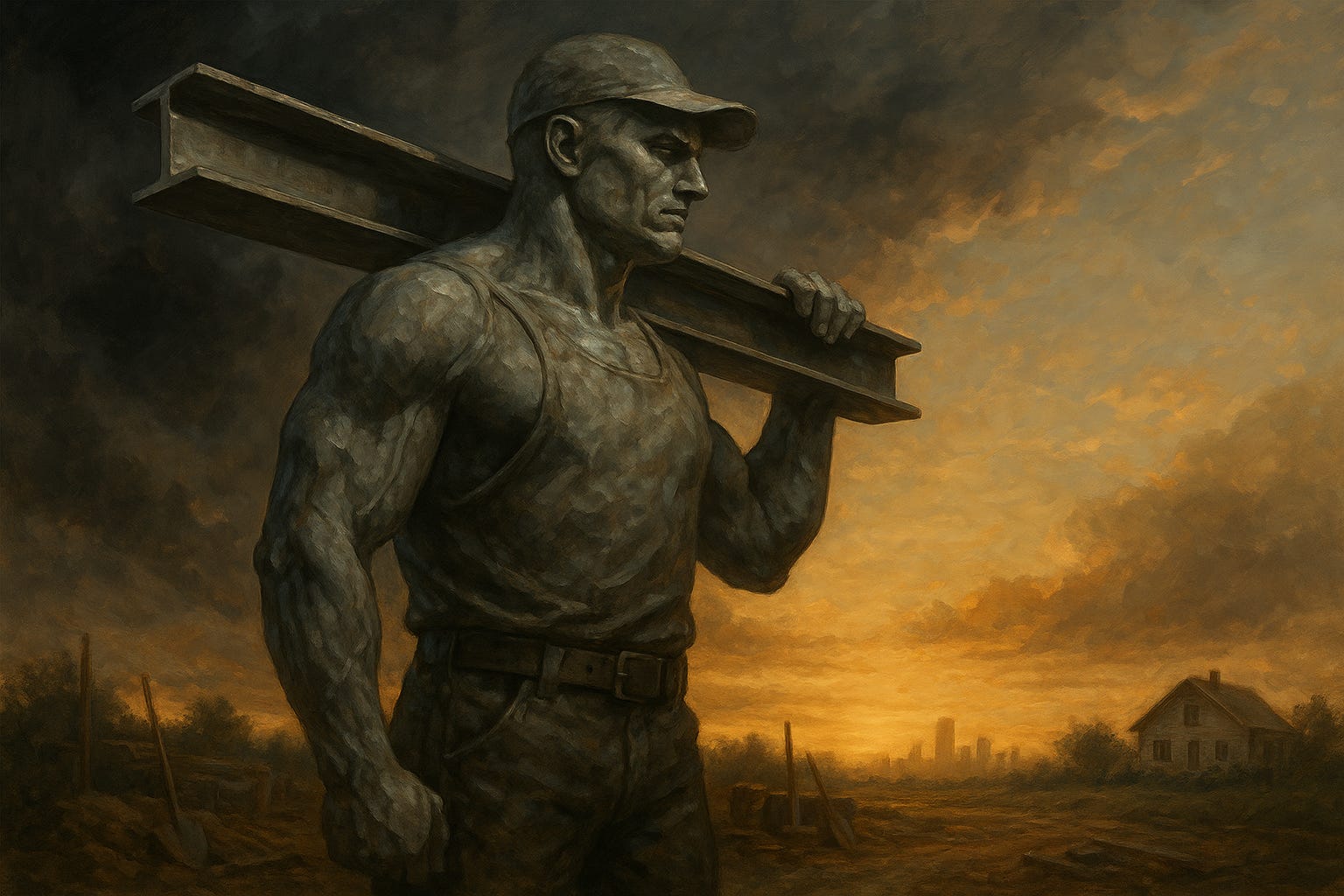
At the end of the day, the weight is not going away.
If anything, if you keep growing, it’s going to increase. That’s not a sign that something’s wrong; it’s proof that what you’re doing matters.
What can change is who you are under that weight. You can be the guy who is always one call away from losing it, or you can be the man who feels the same pressure and responds with clarity, purpose, and a steady hand.
That’s not reserved for some elite class of humans; it’s built decision by decision, day by day, in how you handle the stress you’re already carrying.
If this resonates with you, listen to the full conversation on ‘The Landscaping Podcast’.
Put it on while you’re in the truck, on the mower, at the gym, or winding down at night.
You can find Episode 16, “Under Pressure (How to Handle Stress),” on every major platform, such as Apple Podcasts and on Spotify.
Sometimes the most powerful thing a man under pressure can hear is not a motivational quote, but another man saying, “Yeah, I’m in it too, and here’s how I’m learning to carry it without falling apart.”
- Zac Small